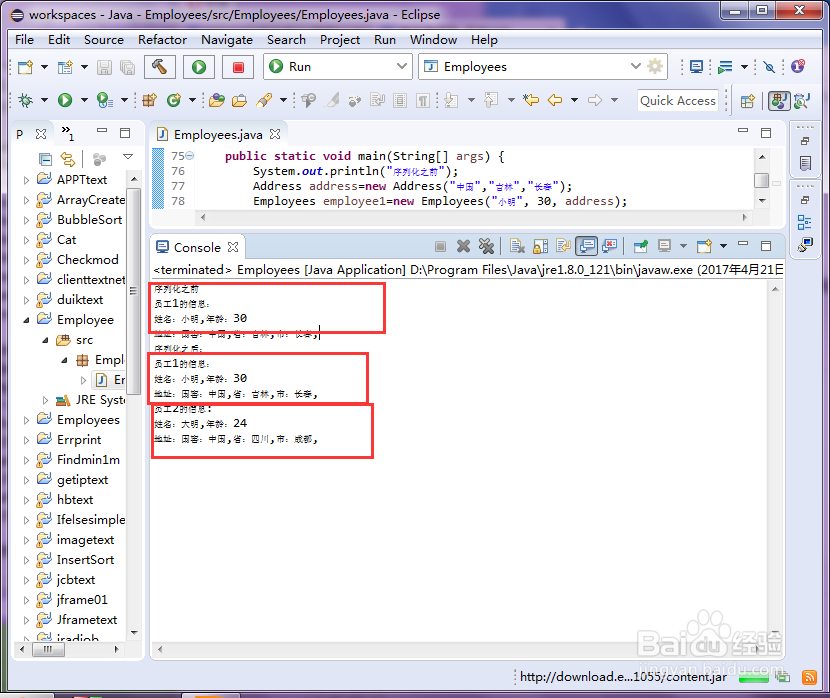
java通过序列化实现对象的深度克隆
1、建立一个java工程,其基本目录见下图,小编采用的是eclipse软件。

2、编写一个子类,该子类被我们要克隆的类引用,用以显示该深度克隆的意义。
class Address implements Serializable{
private String state;
private String privance;
private String city;
public Address(String state,String privance ,String city){
this.state=state;
this.privance=privance;
this.city=city;
}
public String getCity(){
return this.city;
}
public String getState(){
return this.state;
}
public String getPrivance(){
return this.privance;
}
public void setState(String state){
this.state=state;
}
public void setPrivance(String privance){
this.privance=privance;
}
public void setCity(String city){
this.city=city;
}
public String toString(){
StringBuilder sb=new StringBuilder();
sb.append("国窖:"+state+",");
sb.append("省:"+privance+",");
sb.append("市:"+city+",");
return sb.toString();
}
}
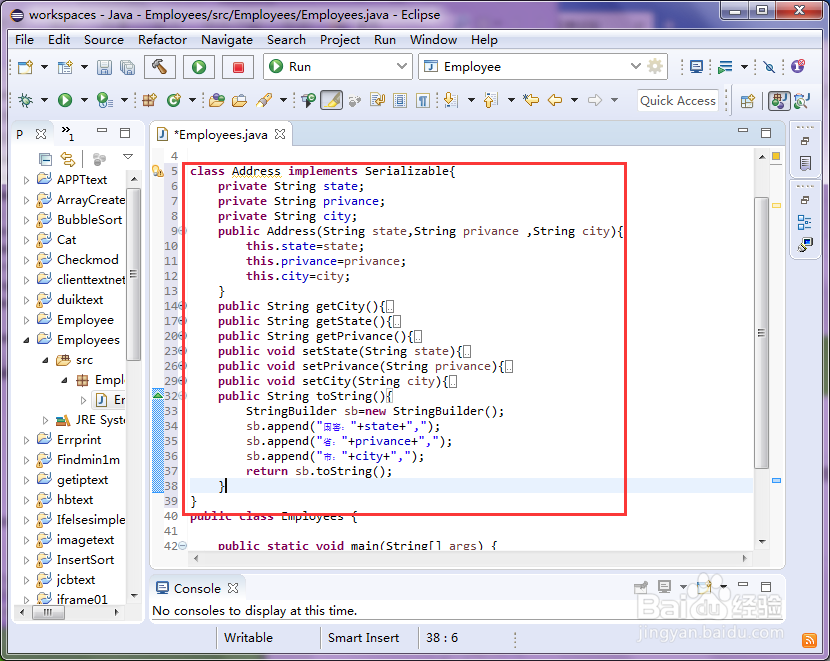
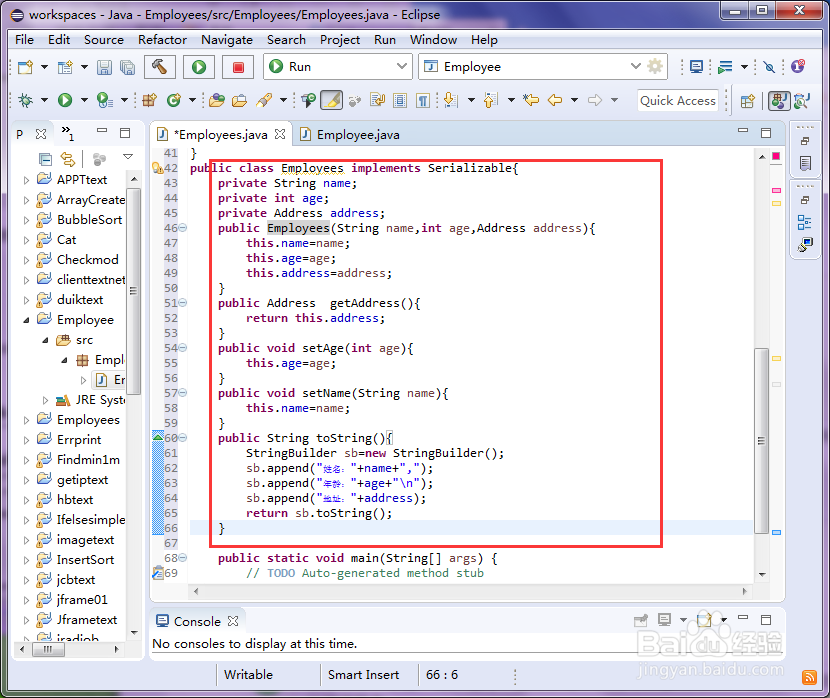
3、编写要被克隆的类,该类就是我们要实现克隆的具体。
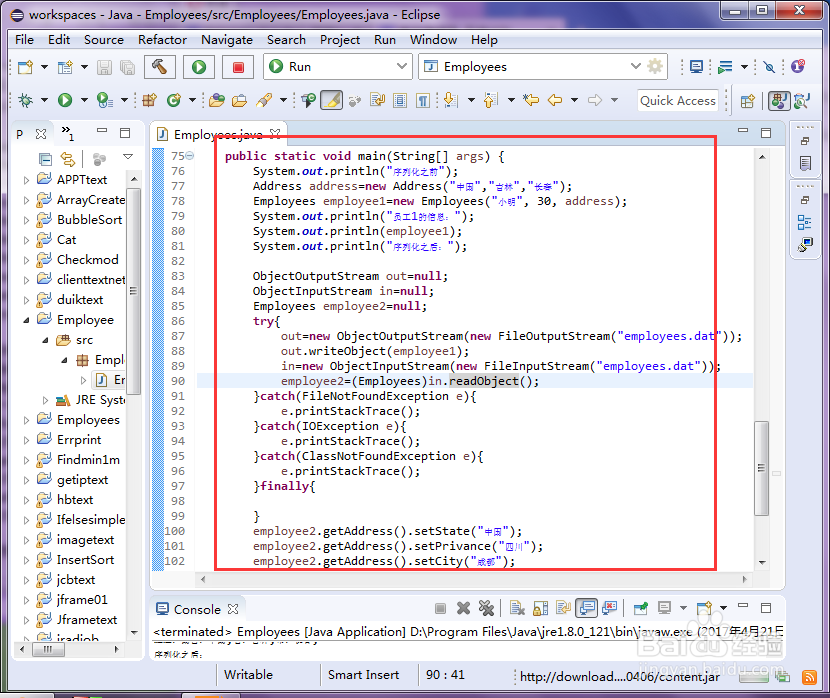
4、编写我们的实验代码,该代码用于实现我们的一个克隆实例,具体如下图所示,代码如下:
public static void main(String[] args) {
System.out.println("序列化之前");
Address address=new Address("中国","吉林","长春");
Employees employee1=new Employees("小明", 30, address);
System.out.println("员工1的信息:");
System.out.println(employee1);
System.out.println("序列化之后:");
ObjectOutputStream out=null;
ObjectInputStream in=null;
Employees employee2=null;
try{
out=new ObjectOutputStream(new FileOutputStream("employees.dat"));
out.writeObject(employee1);
in=new ObjectInputStream(new FileInputStream("employees.dat"));
employee2=(Employees)in.readObject();
}catch(FileNotFoundException e){
e.printStackTrace();
}catch(IOException e){
e.printStackTrace();
}catch(ClassNotFoundException e){
e.printStackTrace();
}finally{
}
employee2.getAddress().setState("中国");
employee2.getAddress().setPrivance("四川");
employee2.getAddress().setCity("成都");
employee2.setName("大明");
employee2.setAge(24);
System.out.println("员工1的信息:");
System.out.println(employee1);
System.out.println("员工2的信息:");
System.out.println(employee2);
}
5、查看效果,单击“编译运行”运行按钮,我们可以看到此深度克隆的实现效果,往细细思考。