python numpy数学计算基础
1、使用numpy对矩阵进行加减计算
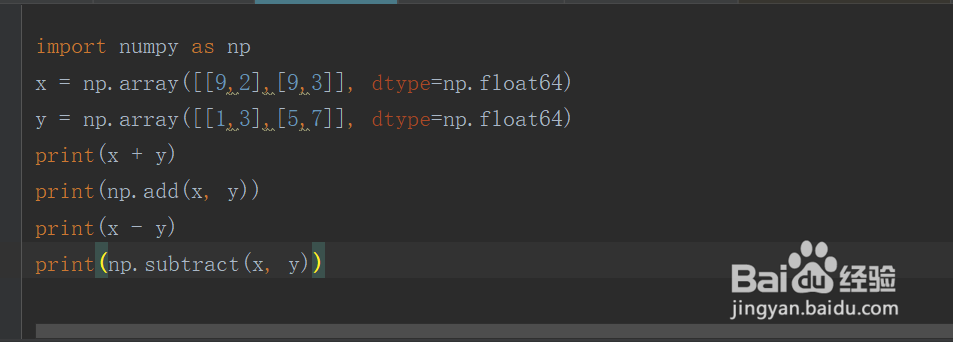
import numpy as nx = np.array([[9,2],[9,3]], dtype=np.float64)y = np.array([[1,3],[5,7]], dtype=np.float64)print(x + y)print(np.add(x, y)) #进行加法计算
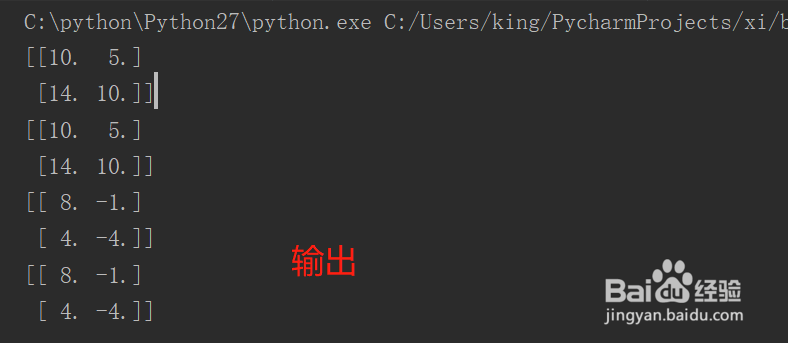
输出结果:
[[10. 5.]
[14. 10.]]
[[10. 5.]
[14. 10.]]
print(x - y)print(np.subtract(x, y)) #进行减法计算
输出结果:
[[ 8. -1.]
[ 4. -4.]]
[[ 8. -1.]
[ 4. -4.]]
2、使用numpy对矩阵进行乘除计算
import numpy as n
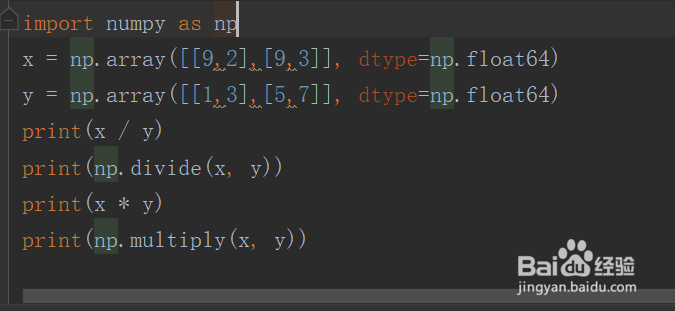
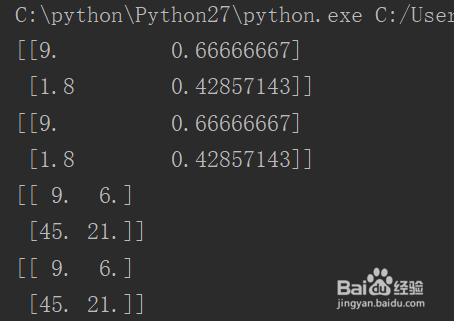
x = np.array([[9,2],[9,3]], dtype=np.float64)y = np.array([[1,3],[5,7]], dtype=np.float64)print(x / y)print(np.divide(x, y)) #除法计算结果
输出结果:
[[9. 0.66666667]
[1.8 0.42857143]]
[[9. 0.66666667]
[1.8 0.42857143]]
print(x * y)print(np.multiply(x, y))#乘法计算结果
输出结果:
[[ 9. 6.]
[45. 21.]]
[[ 9. 6.]
[45. 21.]]
3、使用numpy也可以进行其它运算,包括平方,乘方,三角函数(sin,tan,cos,ctg等等)
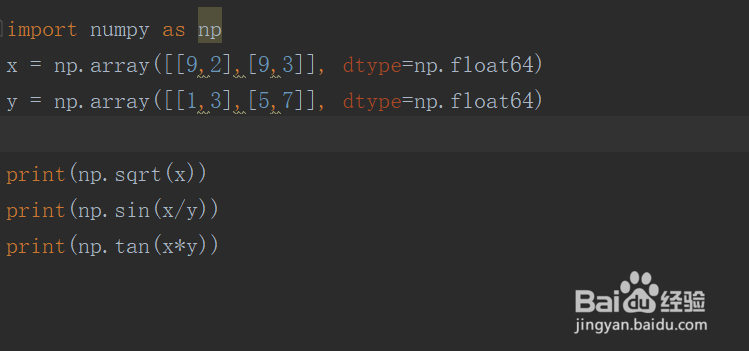
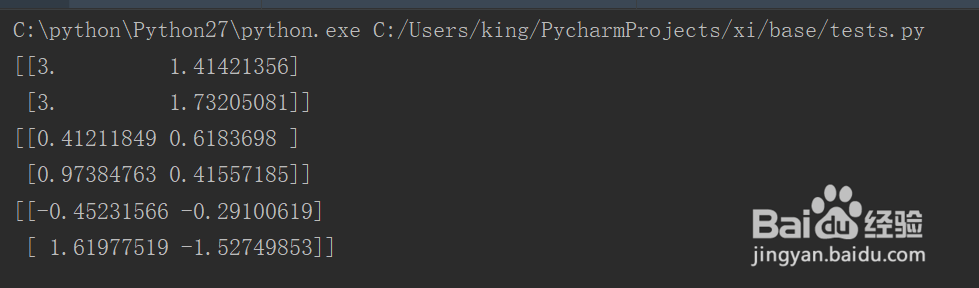
import numpy as npx = np.array([[9,2],[9,3]], dtype=np.float64)y = np.array([[1,3],[5,7]], dtype=np.float64print(np.sqrt(x)) #平方根
输出结果:
[[3. 1.41421356]
[3. 1.73205081]]
print(np.sin(x/y))
输出结果:
[[0.41211849 0.6183698 ]
[0.97384763 0.41557185]]
print(np.tan(x*y))
输出结果:
[[-0.45231566 -0.29100619]
[ 1.61977519 -1.52749853]]
4、numpy常用的一个数学方法,sum
sum可以计算nump中的指定和
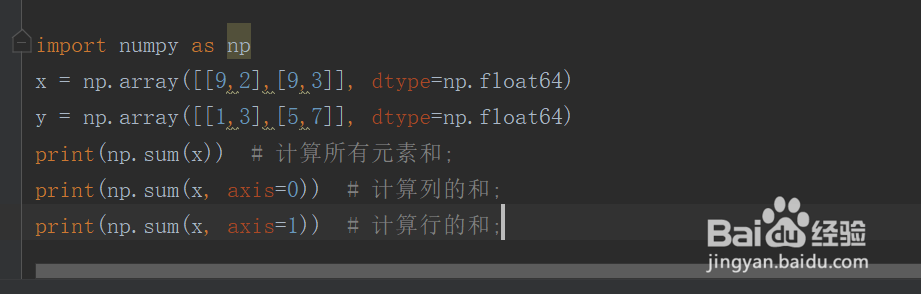
import numpy as npx = np.array([[9,2],[9,3]], dtype=np.float64)y = np.array([[1,3],[5,7]], dtype=np.float64)print(np.sum(x)) # 计算所有元素和;
输出:23.0
print(np.sum(x, axis=0)) # 计算列的和;
输出:[18. 5.]
print(np.sum(x, axis=1)) # 计算行的和;
输出:[11. 12.]